Smarter LinkedIn Strategy for Busy Professionals
You know posting works. You do not have an hour a day. Here is what to cut, what to keep, and how to stay visible on the weeks that get away from you.

· 6 min read · Updated
On this page
Nobody quits LinkedIn because they stopped believing in it. They quit because a busy fortnight turns into a quiet quarter, and by then starting again feels worse than not bothering.
The advice usually offered to busy people is to try harder: post daily, block time, build the habit. That is not a strategy, it is a wish. What follows is the version that survives a bad month.
Why LinkedIn Still Matters in 2025
The case is narrow and worth being honest about.
People look you up. Your profile and your recent posts are what they find, and that shapes the conversation before it starts. If you are hiring, selling, raising, or job hunting, that is worth real money.
The commercial case is not subtle either. 80% of B2B social media leads come from LinkedIn, four in five members drive business decisions at their company, and personal profiles see roughly 8x the engagement of company pages, while company page organic reach has fallen about 60% since 2024. If your company is putting its effort into the brand page, it is pushing against the platform.
Being visible in your field also means opportunities arrive rather than being chased. Not a flood, but the occasional message that turns into something, which is more than most channels deliver.
None of this requires a large audience. It requires that the right few hundred people know what you work on. And it only works if you are still there in six months.
The Real Problem: Staying Consistent Is Hard
Look at where the time actually goes:
- Deciding what to write about, which is the part that eats the most energy and produces nothing visible
- Writing it, thirty to sixty minutes if you care about the result
- Making something to go with it, if the idea needs a visual
- Replying, in the hour after publishing, which is the hour you are usually in a meeting
Two or three posts a week means several hours. Most people do not have several spare hours, so they do it for three weeks, then a deadline lands, and that is that.
The fix is not discipline. It is removing steps.
What If You Had Help?
The realistic version looks like this. You open your laptop on a Monday. The week’s ideas are already ranked, based on what actually worked on your account before. Drafts are written in something close to your voice. The graphics exist. You spend fifteen minutes editing and approving, and you are done until the replies come in.
That is not automation replacing you. Every decision is still yours. It just removes the four steps that were never the interesting part.
What Is Depost AI?
Depost AI is an AI content agent platform for LinkedIn built around four agents that run that loop and hand you the output for approval.
Post Generator
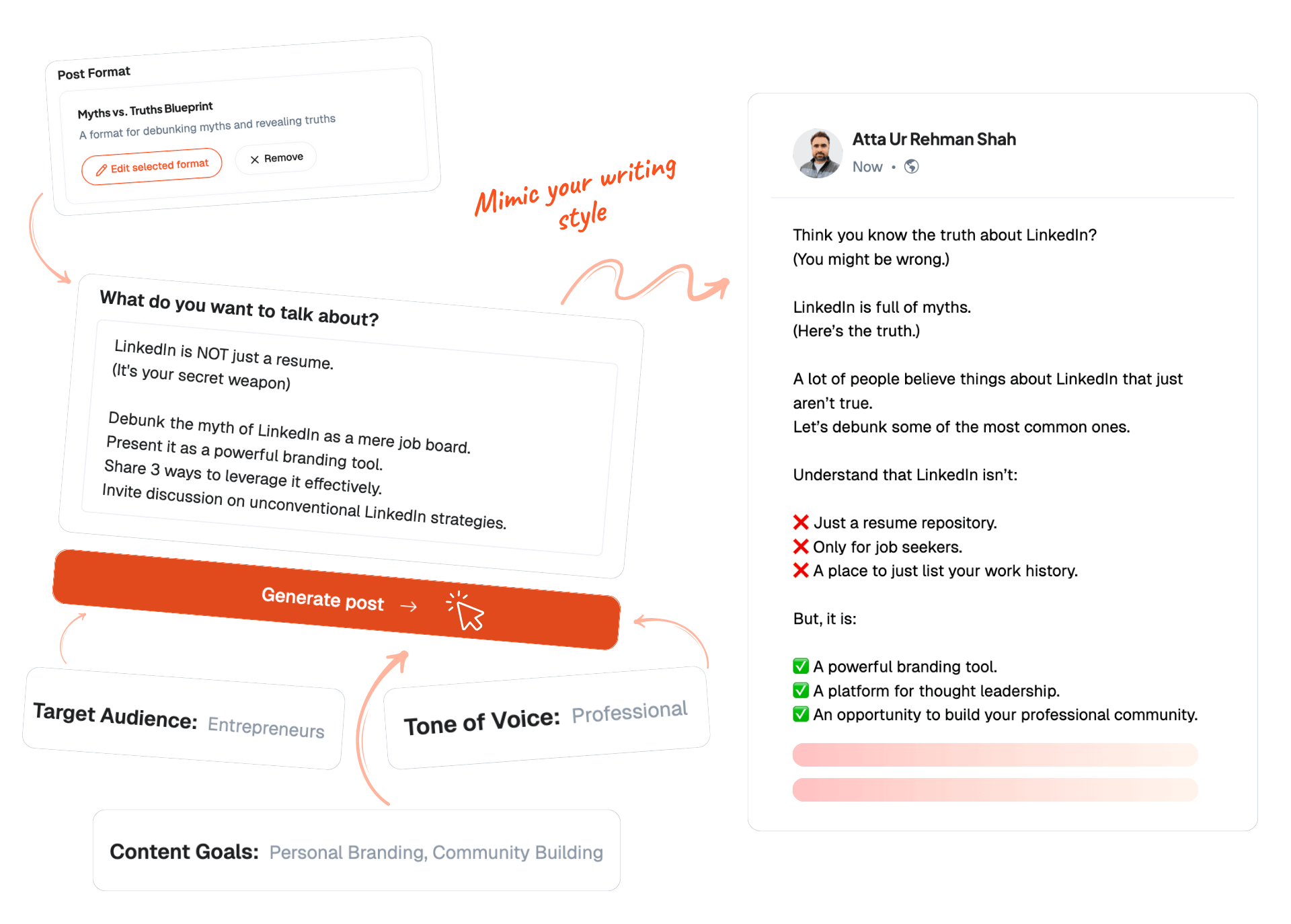
Tell it what you are trying to do, whether that is getting leads, telling your story, or building a reputation in a niche, and it drafts posts in a brand voice learned from what you have already published, not from a questionnaire.
Every draft is editable, and each edit teaches it something about how you actually write.
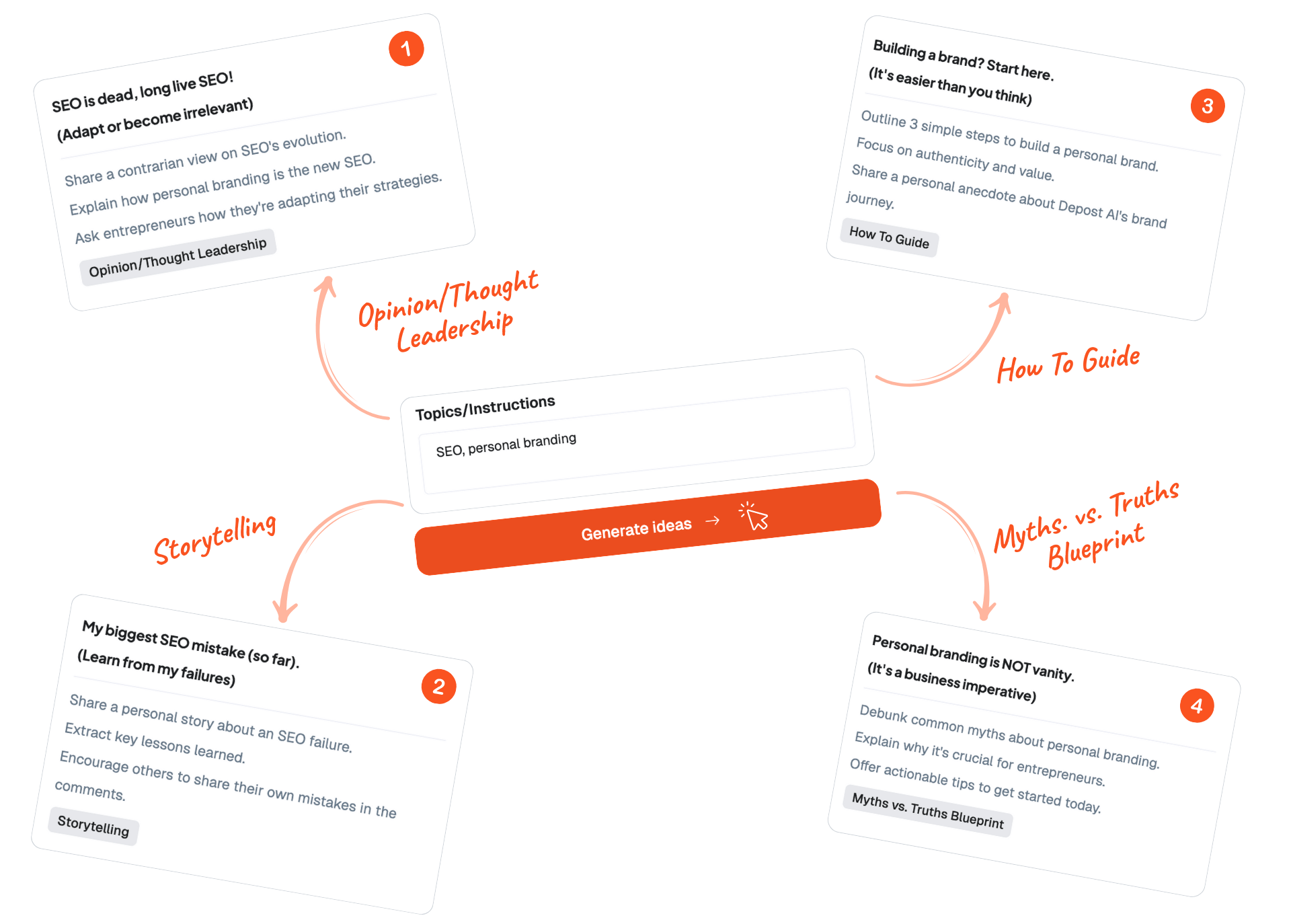
Idea Generator
The blank page is the real enemy. Ideas arrive ranked by what has worked on your account, drawn from your brand memory and what is moving in your niche.
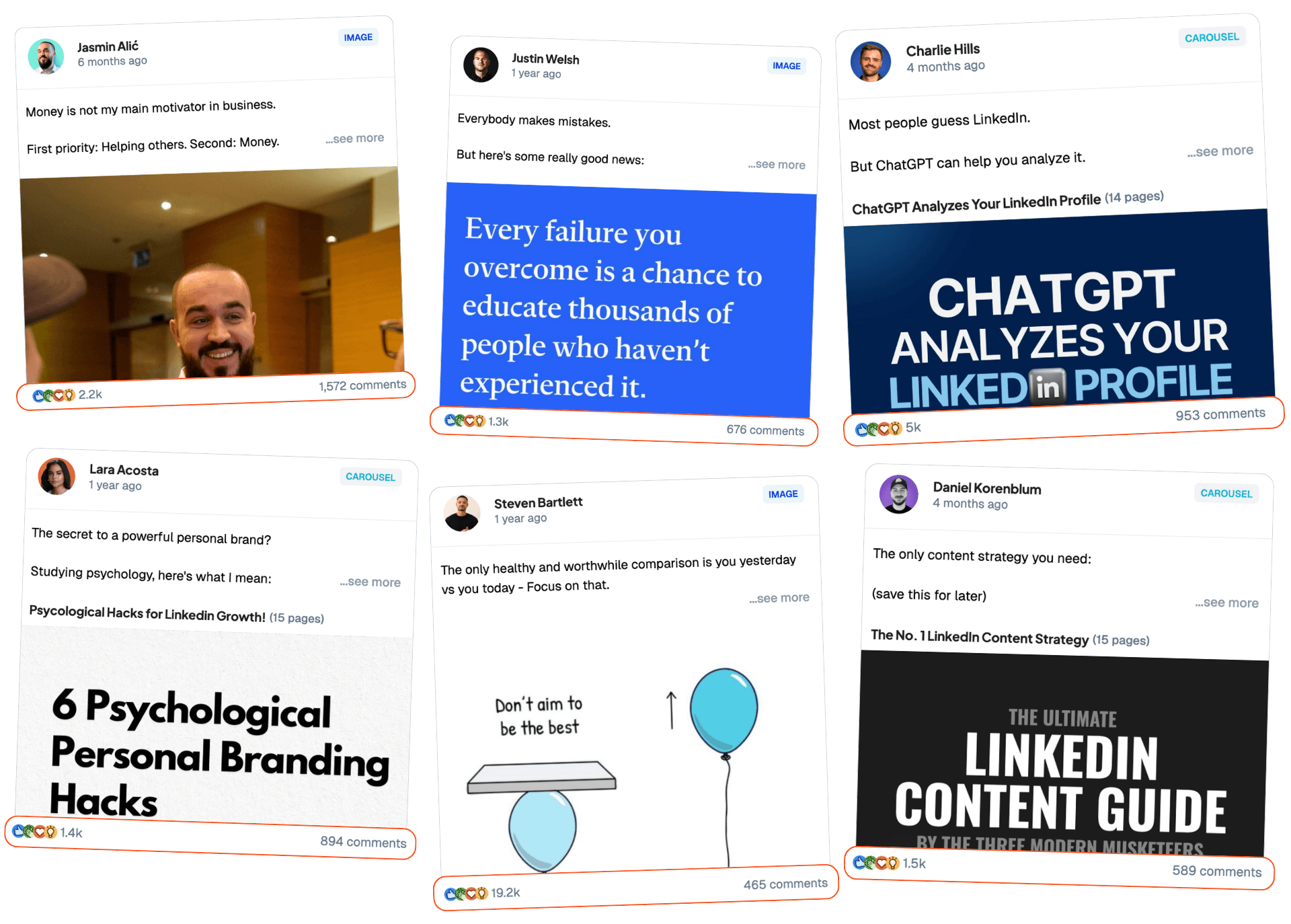
Inspiration Library
An indexed library of over 100,000 high-performing posts, filterable by topic, format, and style, for the days when you want to see how someone else structured an argument before you write your own.
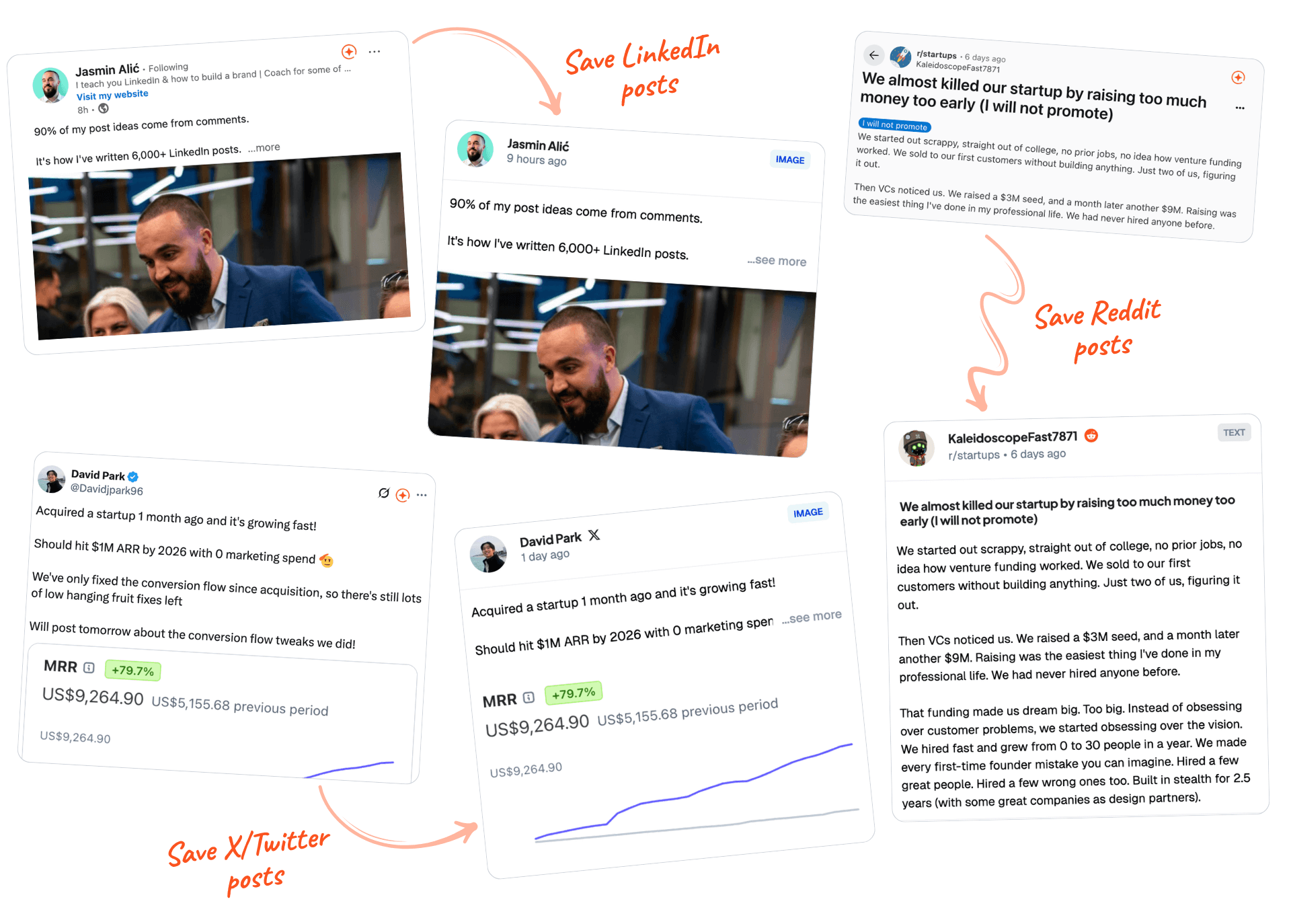
Bookmarks
Save anything worth coming back to and organize it by format, tone, and relevance. Bookmarks are raw material: the chat can turn one into a draft, and the Graphic Generator can design from it.
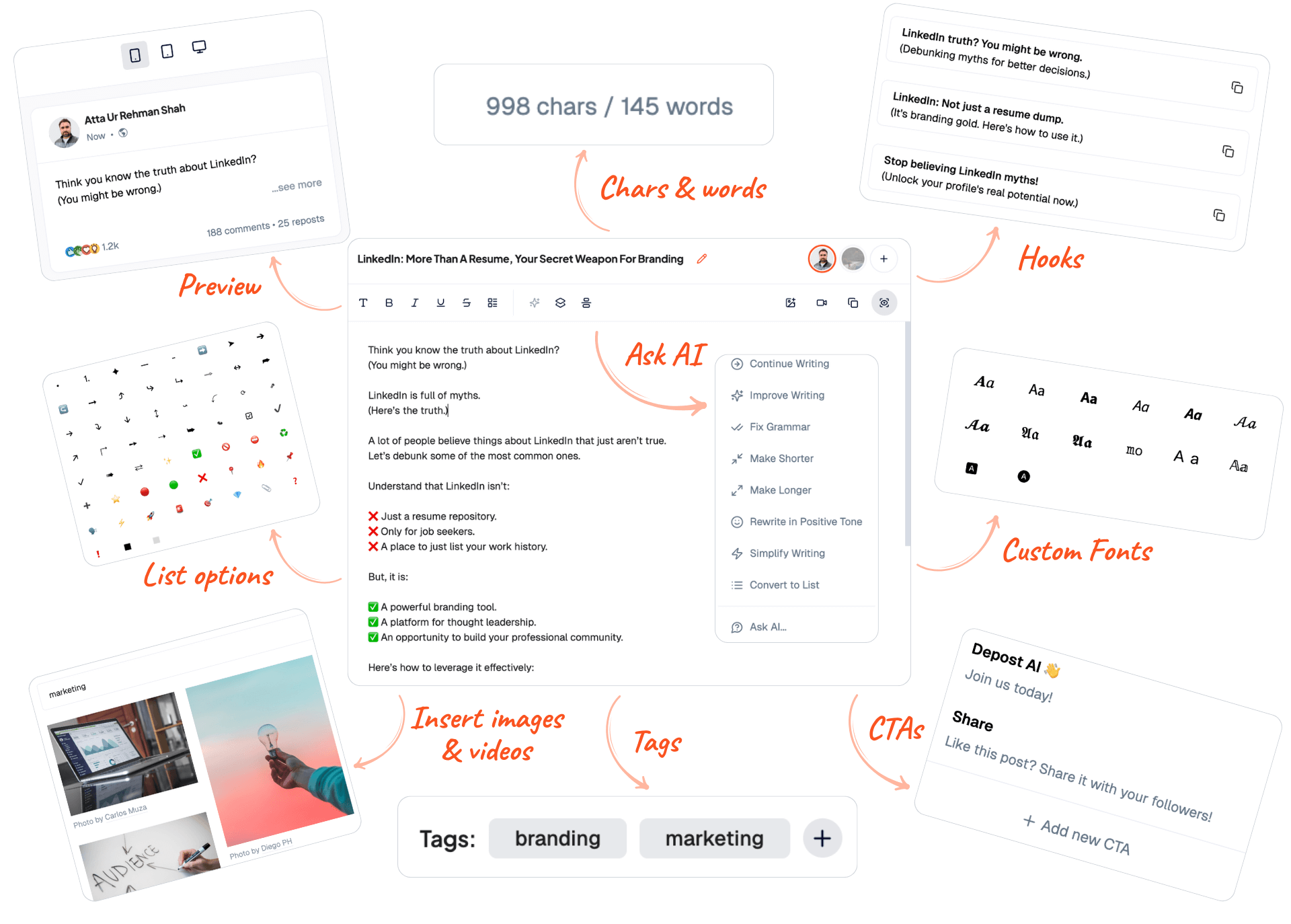
The Editor
Rewrite, restructure, and adjust tone, with every draft linked back to the reasoning that produced it. You can always see why a post says what it says.
Scheduling
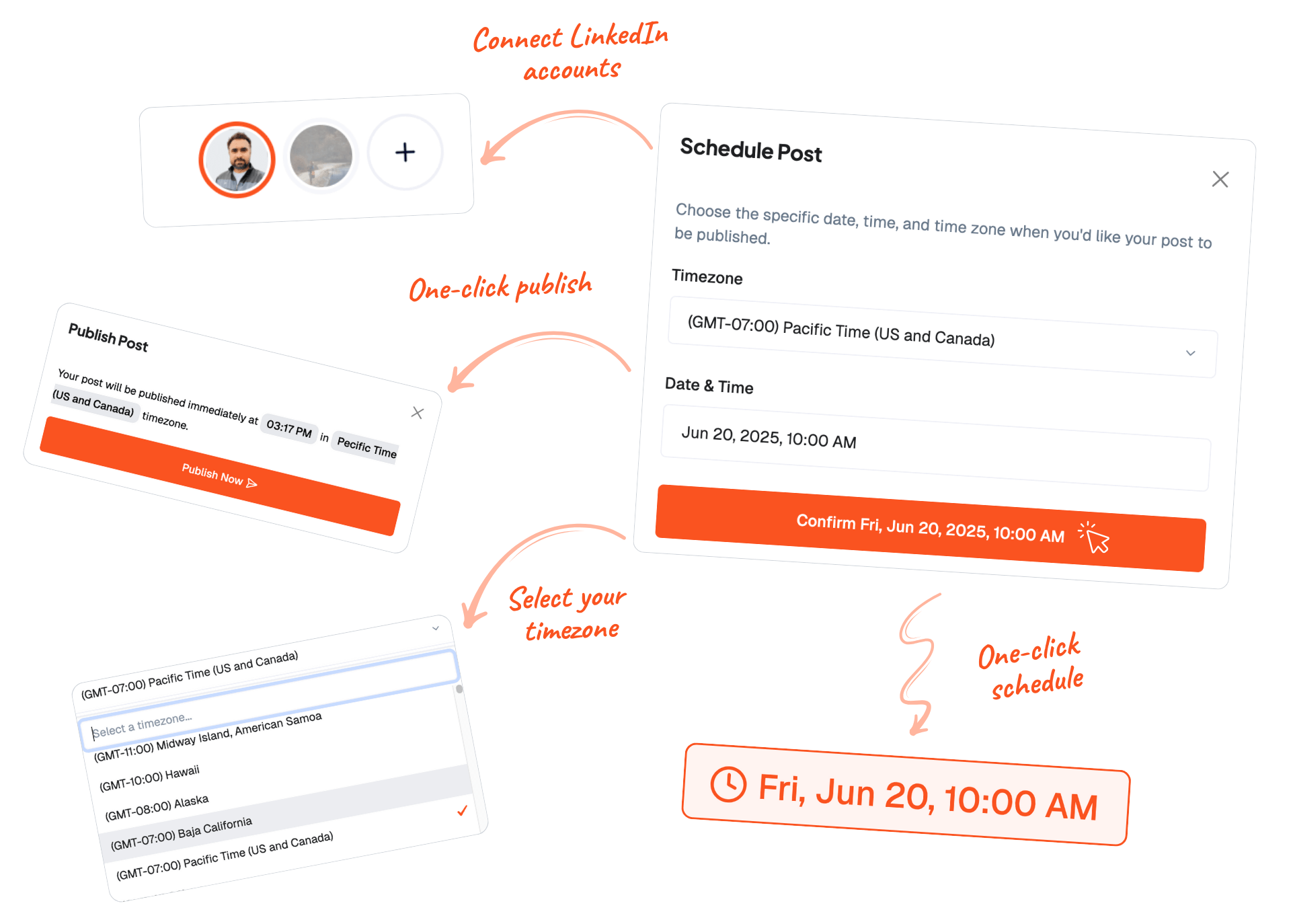
Approved drafts flow into a queue and publish through LinkedIn’s official API at the times your audience is actually reading. The first comment is written with the post and ready for you to add when it goes live. If something fails to publish, you get told, rather than finding out three days later.
Engagement
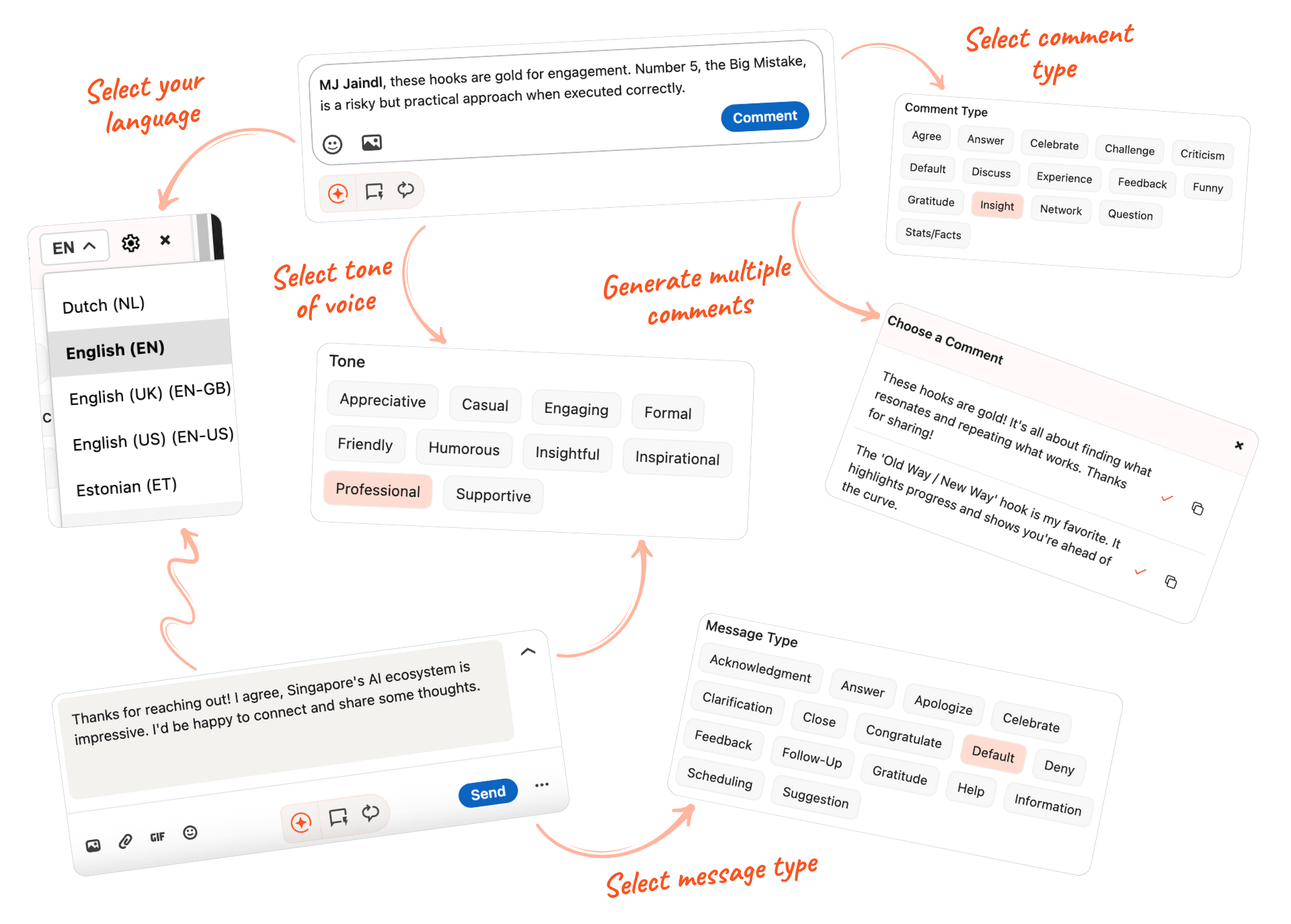
Half of LinkedIn happens in other people’s comments. Targeted feeds put the posts worth replying to in one place, and replies, DMs, and connection notes arrive drafted in your voice.
You read them, edit them, and send them. Nothing goes out on its own, which is the difference between a tool that saves you time and one that gets your account restricted.
Who This Actually Helps
Freelancers who plan a week on Sunday, approve everything in half an hour, and spend the rest of the week on client work.
Founders who need to be visible for hiring and fundraising but cannot make content a daily job, and whose company updates are worth more than generic advice anyway.
Coaches and consultants whose pipeline runs on inbound, where being consistently visible to a few thousand people in one niche is the whole marketing strategy.
The common thread is not company size. It is people whose bottleneck is time, not knowing what to say.
Getting Started
- Create an account at app.depost.ai and start the 7-day trial.
- Connect your LinkedIn account. Depost AI syncs your published history and follower history, which is what the Performance Analyzer reads before anyone writes anything.
- Review your brand memory. Onboarding drafts your positioning, pillars, audience, and voice from your profile and past posts. Correct it, since everything downstream reads from it.
- Approve your first week. Ideas, drafts, and graphics are waiting. Edit what you want and queue the rest.
The first fifteen minutes are the only setup that matters, and most of it is you correcting what the agents inferred about you.
Conclusion
LinkedIn does not reward the best writers. It rewards the people who are still there in month six.
If time is what stops you, adding discipline will not fix it. Removing steps will.
If you are not ready for the whole loop, the free LinkedIn tools cover the small jobs on their own: a headline, a hook, a post preview, an engagement rate check. No login for any of them.
FAQ
How often should I post on LinkedIn to grow my reach?
Two to four times a week works for most people. Consistency matters more than volume: twice a week for six months beats five times a week for three weeks and then nothing.
What kind of posts work best on LinkedIn?
Specific things from your own work. What broke, what it cost, what you would do differently. Polished advice performs badly because there is already too much of it.
Can AI-generated posts still feel personal?
They can when the draft is built from your own published writing and you edit it before it goes out. They cannot when nobody reads them before they publish, which is why Depost AI requires your approval on every post.
Is it okay to schedule LinkedIn posts in advance?
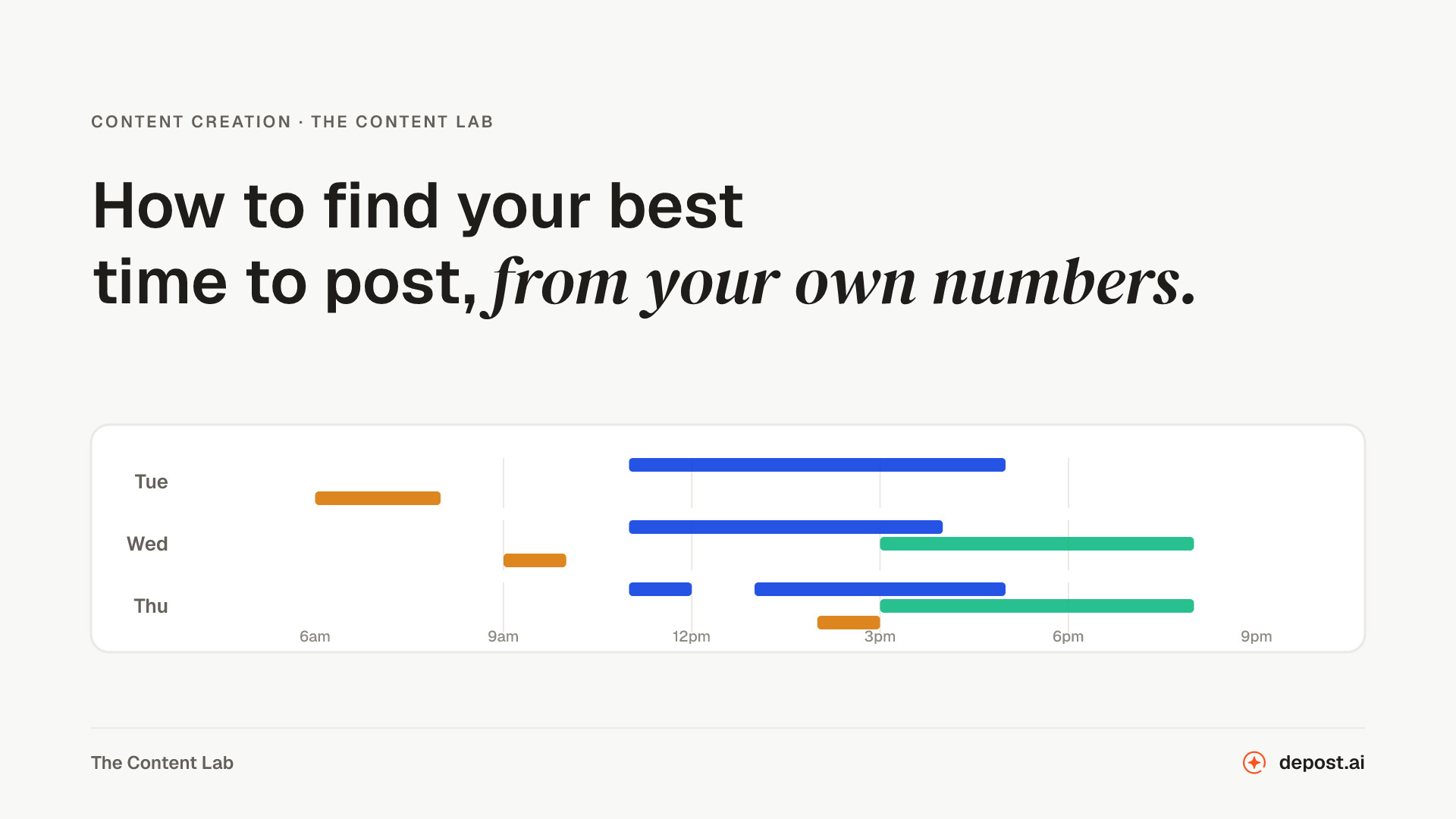
Yes. Scheduling through LinkedIn’s official API is a normal, supported thing to do, and it is the main reason people manage to stay consistent through busy weeks. Just be there for the comments afterwards. If you are choosing the hour, how to find your own best time to post walks through a four-week test that uses your own analytics rather than a generic chart.
What’s the fastest way to start seeing results on LinkedIn?
Pick one thing you want to be known for, post about it twice a week, and reply to everyone who comments. Most people fail at the “keep doing it” part, not the strategy part.